
AI Integration & Drupal's Strategic Shift: Shaping the Future of Enterprise Web

Drupal has long been the CMS of choice for enterprise organizations and government agencies requiring robust security, flexibility, and scalability. Now, with its strategic pivot toward AI integration and the launch of initiatives like Drupal CMS 2.0, the platform is positioning itself as the leading open-source CMS for responsible AI adoption.
For organizations looking to harness AI without sacrificing control, this shift represents a significant opportunity.
The Accidental AI Advantage
What makes Drupal uniquely positioned for the AI era? According to Drupal's creator, Dries Buytaert, it comes down to an "accidental AI advantage."
Years of architectural decisions prioritizing structured data, granular content versioning, and API-first design have created a foundation ideally suited for modern AI systems. Large language models require machine-readable formats to operate safely and effectively: and Drupal delivers exactly that.
While other platforms struggle to retrofit AI capabilities onto monolithic structures, Drupal's architecture was built for this moment.
Solving the Enterprise Fragmentation Problem
Large organizations and government agencies face a common challenge: fragmented AI adoption. Teams often resort to disconnected third-party platforms that require heavy IT involvement and manual integration. The result? Slower content workflows, increased operational costs, and frustrated teams.
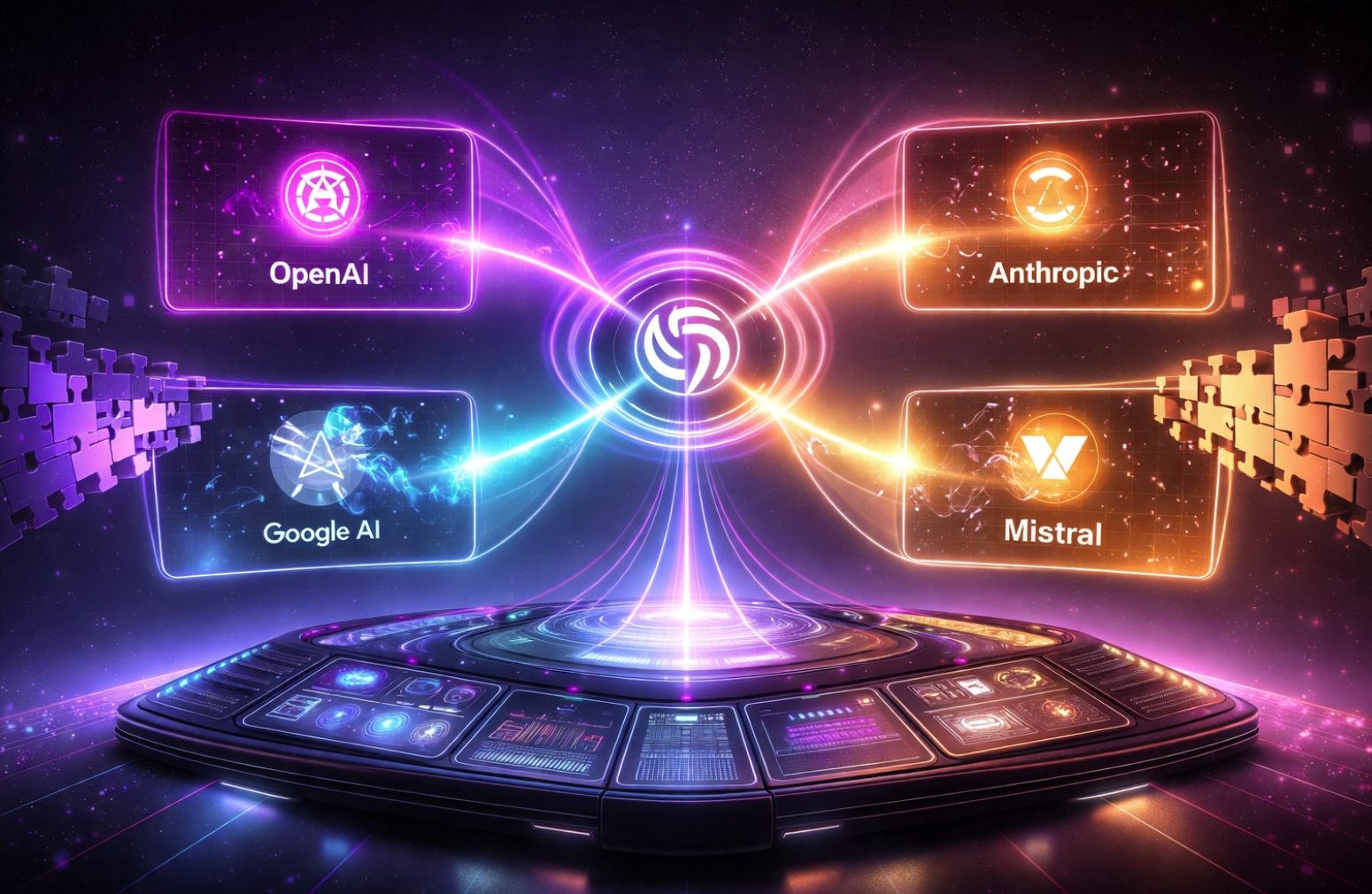
Drupal AI module addresses this head-on by providing a unified framework with integrations to over 48 AI providers, including:
- OpenAI and Anthropic for advanced language capabilities
- Google Gemini and Mistral for diverse model options
- Open-source solutions like Ollama and Hugging Face for organizations requiring on-premise control
This abstraction layer empowers organizations to select any AI vendor: or switch between them: without vendor lock-in. For government agencies with strict procurement requirements and enterprises with evolving AI strategies, this flexibility is invaluable.
Empowering Content Teams, Not Replacing Them
One of the most compelling aspects of Drupal's AI integration is its focus on empowering non-technical users. Solutions like the Acquia AI Provider embed AI capabilities directly into Drupal workflows through pre-configured, secure modules.
Content editors and site builders can now leverage AI for:
- SEO optimization without waiting on technical teams
- Advanced personalization for diverse audience segments
- Multilingual content support at scale
- Accessibility improvements through AI-assisted content analysis
The goal isn't to replace human creativity and judgment: it's to handle routine tasks so teams can focus on strategic work that moves the needle.
Drupal CMS 2.0: The Next Evolution
Drupal CMS 2.0, launched in January 2026, represents the platform's most significant leap forward. The release introduces hybrid workflows that mix deterministic logic with AI steps, enabling more complex automation scenarios while maintaining the control enterprises demand.
Key capabilities include:
- AI agents that work collaboratively with content editors
- Conversational AI-powered search replacing traditional site search with faster, more accurate results
- Intelligent automation that learns and adapts to organizational workflows
For government agencies managing vast content libraries or enterprises serving global audiences, these capabilities translate directly to better user experiences and operational efficiency.

Security and Flexibility: Non-Negotiable
Throughout this AI evolution, Drupal maintains its reputation for security and customization. Organizations can implement AI-first content strategies while maintaining:
- Deep integration with internal systems
- Complex multilingual architectures
- Granular access controls and audit trails
- Compliance with government security standards
This balance of innovation and stability is precisely why Drupal remains the platform of choice for organizations where failure isn't an option.
What This Means for Your Organization
Drupal's strategic shift toward AI integration isn't just a technical upgrade: it's an opportunity for large organizations and government agencies to modernize their digital presence without starting from scratch.
Whether you're looking to enhance accessibility, streamline content workflows, or deliver personalized experiences at scale, Drupal's AI capabilities provide a responsible path forward.
Ready to explore how AI-integrated Drupal can transform your digital strategy? Get in touch with DrupalBliss to discuss your organization's needs.